
There’s a weirdly specific question that comes up whenever people organize a craft night or sign up for a community class: should I buy one crochet kit per person or a handful of the same kit to share? The answer isn’t only logistical—it shapes the learning experience, the pace, the social vibe, and the final results. This style piece compares crochet kit choices for group workshops versus solo practice, so you can pick the right package for your situation.
How I’m Judging These Crochet Kits
Before we dive in, here are the practical metrics I apply when comparing kits for group use versus solo use:
- Setup complexity: How many tools and how much prep does the kit need?
- Project time: Can most people finish something in one session?
- Skill accessibility: Is the kit friendly to the true beginner?
- Materials per learner: Does one kit equate to one finished item?
- Repeatability & shareability: Can parts be prepped ahead to speed a class?
- Social friendliness: Are the patterns forgiving in group settings?
I tested mental models, not lab data—meaning this is practical, classroom-tested advice rather than academic research. Good enough for planning your next meet-up.
The Group-Workshop Case—What to Prioritize
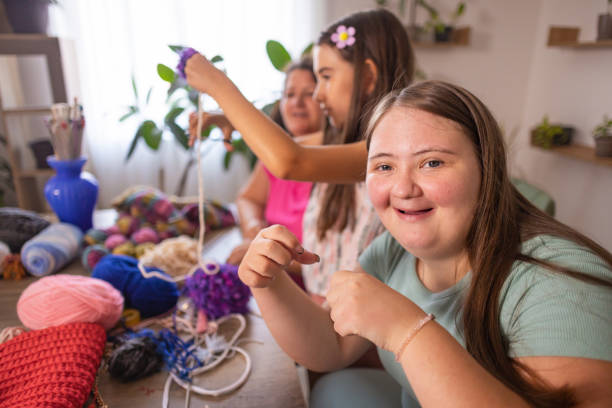
When you are teaching library courses or organizing group café parties and after-school activities, the priorities shift.
Key Needs for a Group-Focused Crochet Kit
- Complete kits per person reduce friction. In a class, people who can’t find the right hook or color spend energy on logistics instead of stitches. A one-kit-per-learner approach keeps momentum.
- Short, visible wins are essential. Projects that show clear progress—and can be finished in 60–90 minutes—help confidence.
- Clear visuals or links to quick tutorials are helpful when one instructor is supporting many hands.
In group settings, the crochet kit should act like a classroom-ready tool: predictable, fast, and low-ambiguity.
The Solo-Practice Case—What to Prioritize
Solo makers want different benefits.
Key Needs for a Solo-Friendly Crochet Kit
- Flexibility and variety. Solo stitchers enjoy experimenting with color and texture. A kit that invites remixing or includes extra colorways encourages longer-term engagement.
- Projects that scale. A kit that lets you make multiple small pieces like coasters, mini plants, or animal charms rewards evening-by-evening making.
- Instructions that are slightly deeper. Solo learners often appreciate tips on tension, finishing, or small design tweaks.
For one person on the couch, the crochet kit becomes a little studio, not just a single-night exercise.
Two Concrete Kit Examples—Classroom-Ready vs. Cozy-Solo
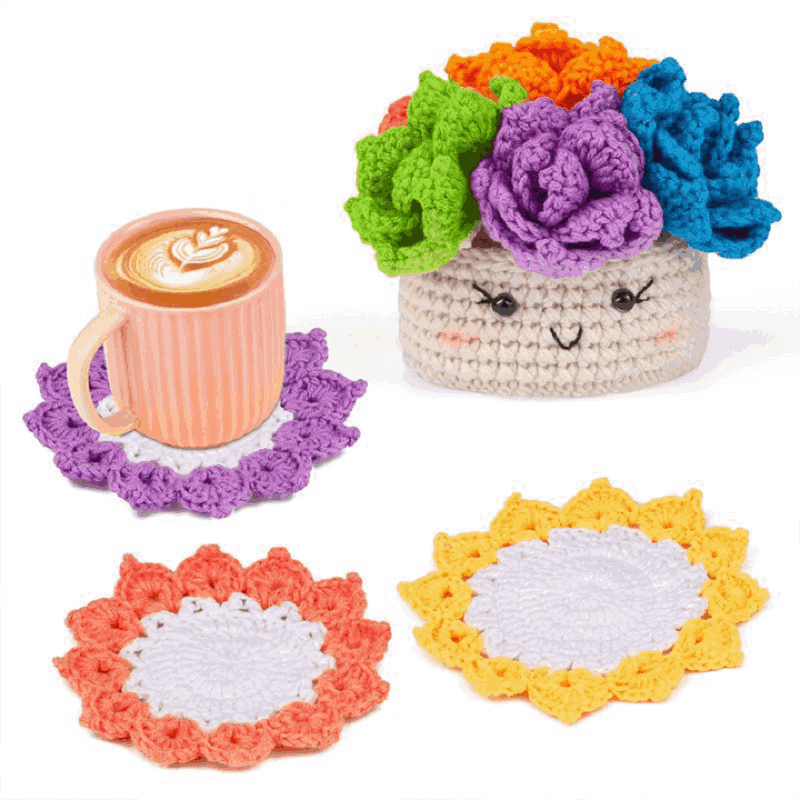
To make this review practical, let’s evaluate two product examples from your line. I picked these because they represent distinct design intents: one is grab-and-go practical, and the other encourages small series-making.
Six-Color Coasters Crochet Kit—Class-Friendly Contender
- Why it fits groups: The coaster pattern is flat, repetitive, and forgiving—excellent for beginners. Each student can finish a coaster in a single 45–60 minute session. Because the kit focuses on a simple shape, instructors can demonstrate a stitch and then move around the room helping with tangles, rather than teaching complex increases or shaping.
- Group pros: Fast wins, easy to grade as “done” in a class, and highly shareable on social media. Right photos = Good vibes.
- Group cons: Less scope for personalization unless you bring extra yarns; each kit is essentially a single-use lesson unless you supply multiple kits or spare skeins.
Succulent Plants Crochet Kit—Solo-Sesh Superstar
- Why it fits solo making: The small potted succulents are slightly sculptural and work well as series projects. One crochet kit can seed a collection of desk-friendly plants that the solo maker can space across evenings. The pattern encourages small variations in texture and color.
- Solo pros: High replay value, décor-friendly end results, and a satisfying “build a collection” loop that keeps makers engaged beyond a single session.
- Solo cons: Not ideal for a single-session class unless you pre-cut yarn and limit scope; assembly steps may require focused attention that beginners in groups might find tricky.
Practical Classroom Hacks
If you decide to run a class and use crochet kits, here are pragmatic tricks to keep things smooth:
- Prep “starter balls”: Pre-wind mini-balls so every participant opens the same tidy package.
- Label hooks and pouches: Numbered sets reduce swaps and lost pieces.
- Demonstration rounds: Teach the first 2–3 rounds as a live demo, then circulate. Visual learners need to see the motion.
- Buddy system: Pair faster makers with newcomers—peer teaching speeds confidence.
These moves turn a pile of kits into an efficient classroom.
What to Tell Someone Choosing Between Group vs. Solo Kits
If you’re picking kits for a workshop, prioritize simplicity and per-learner completeness. If you’re buying kits for yourself, prioritize variety and collectability. That’s the short answer.
A longer, mildly opinionated one: people underestimate the social value of finishing something in class. A bright coaster made by your own hand is a confidence engine. Meanwhile, solo projects that build into sets reward patience and create a small personal archive.
Final Verdict—Match the Kit to the Moment
- For quick, social workshops: pick a crochet kit that produces a flat, visible, one-session result. The Six-Color Coasters Crochet Kit saves time, reduces confusion, and gives your class an immediate trophy.
- For long-term practice at home, pick a crochet kit that supports variation and series-making. The Succulent Plants Crochet Kit keeps you coming back, one tiny plant at a time.
For a single meetup, buy one crochet kit per person. For at-home exploration, one versatile crochet kit and a little curiosity will do fine. Try both modes at different times—you’ll learn what you enjoy more. Experience hands-on creativity and joy with an all-inclusive crochet kit today.