Why a Vegetable Crochet Kit Is More Than Cute — It’s a Tiny Curriculum

A crochet kit that makes carrots and tomatoes might sound whimsical. But the vegetable crochet kit quietly does three useful things at once: teaches stitches, encourages healthy-eating conversations, and gifts you tiny, durable decor that never wilts. If you think this is fluff, stick around — there are practical angles here you didn’t expect.
Hands-On Food Literacy — How a Crochet Kit Teaches Kids the Language of Food
From Farm-to-Table, in Yarn Form
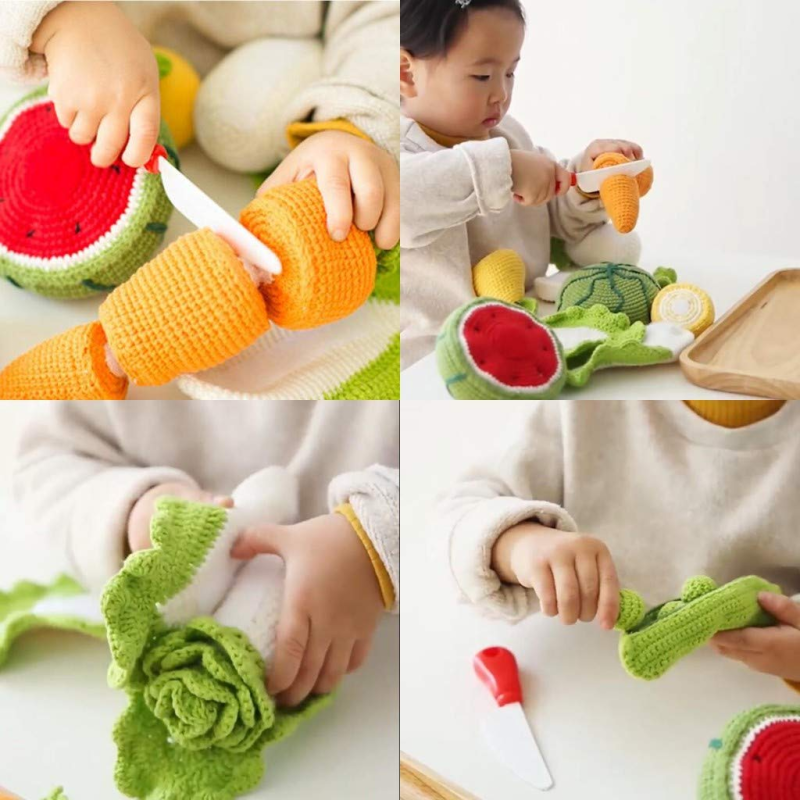
When a child holds a felt-topped broccoli made from a crochet kit, they aren’t just holding yarn. They’re holding an entry point to conversations about where food comes from. Use one piece to tell a tiny story: seed -> soil -> harvest. It’s tactile. It’s visual. It sticks in memory better than a quick lecture.
Play That Primes Healthy Choices
Role-play with play kitchens, market stalls, or a pretend grocery list — the vegetable crochet kit makes those scenarios possible without real perishables. Parents report that kids who “prepare” food in play are more willing to try new veggies at the table. This isn’t magic; it’s exposure minus the pressure.
Design Lessons Disguised as Craft — Color, Shape, and Proportion
Color Theory for Beginners
A tiny beet with two shades of purple teaches contrast better than a color wheel. The crochet kit nudges makers toward choices: complementary greens with reddish roots or a monotone tomato collection. You learn about harmony by doing, not by memorizing jargon.
Scale and Proportion, Made Playful
When you make a carrot that’s too long for your tea set, you learn scale instinctively. That awareness carries over: suddenly your coasters, cushions, or wall-hangs look more intentional. Small projects from a crochet kit are ideal classrooms for this — low stakes, clear feedback.
Sensory and Motor Gains — Tiny Stitches, Big Hand Skills
Fine Motor Practice Without the Drill-Sergeant Vibe
Need to strengthen hand coordination? Repeating single crochet, slipping a hook, pulling a loop — these are small, precise movements. A crochet kit provides that repetition naturally because you want to see the carrot take shape, not because someone told you to do 50 reps.
Texture Play for Sensory Learners
Different yarn weights, the firmness of stuffing, the contrast between smooth cotton and fuzzy blends — these textures help kids, neurodiverse learners, and adults fine-tune tactile discrimination. And yes, it’s fun. Which helps the learning stick.
Practical Household Uses — Beyond Play and Pedagogy
Kitchen-Friendly Decor
Crocheted vegetables make charming, washable accents: a bowl of faux produce for an entryway, a string of tiny vegetable garlands for a kid’s nook, or a reusable centerpiece. A crochet kit designed for vegetables usually includes colors and sizes that behave well together — coordinated without being matchy.
Durable Toys and Gifts
Real fruits get mashed; yarn doesn’t. A vegetable crochet kit yields items that survive toddler exploration and the occasional laundry cycle. They’re also excellent gift-stuffer items for teacher appreciation, birthday party favors, or stocking stuffers that feel handmade without being time-consuming.
Final Thoughts — Small Stitches, Practical Outcomes
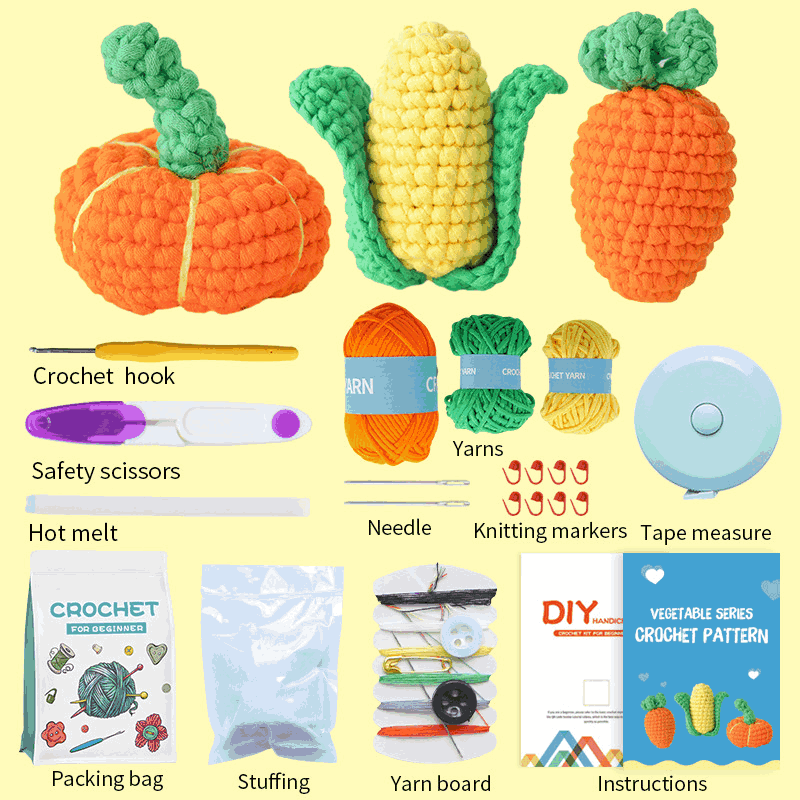
Look, a lot of craft advice is lofty: “Find your zen.” That’s true sometimes, but the vegetable crochet kit earns its keep in pragmatic ways. It teaches through play, strengthens hands, produces durable decor, and—crucially—gives kids (and adults) a safe, shame-free way to explore food ideas. It’s not just cute. It’s quietly useful.
Ready to try? Grab a crochet kit—start with a single vegetable—and see how one small project can ripple into teaching moments, better dinner conversations, and a shelf full of tiny, happy vegetables.
Get Your Vegetable Crochet Kit Now and Start Making Small Things That Matter.