Choosing Crochet Hook Size: Balancing Yarn Thickness, Tension, and Feel

A crochet kit does not magically make your project perfect. Choosing the right hook size for your yarn and your personal tension is what does. Especially for a beginner, the sweet spot between hook, yarn, and hand tension is everything—get that wrong and the fabric misbehaves; get it right and you’ll fly. This guide helps you test and tune your feel so your next crochet kit project looks and feels professional.
Why Hook Size Matters
Hook size affects loop size, stitch density, drape, and how comfortable your hand feels after an hour of stitching. Too small a hook = tight fabric and sore fingers. Too big = sloppy stitches and lost shaping. It’s not “bigger is better” or “smaller is neater”—it’s about the balance.
The Basics: Hook Size — Yarn — Tension (Gauge)
Hook Size, Yarn Weight, and Tension in One Sentence
The hook governs loop diameter, yarn weight sets thickness, and your tension determines how those loops sit together.
Read the Labels, but Don’t Worship Them
Your crochet kit will usually recommend a hook size (e.g., 4.0 mm). That’s a useful starting point, but every maker’s tension differs. Even two beginners with the same kit can get different gauges. Always swatch.
Gauge Is Not Optional
You want the right gauge when sizing matters—for toys, garments, or fitted pieces. Swatch: make a 4×4 inch (10×10 cm) square, wash if you’ll wash the finished item, block if needed, measure row and stitch counts, then adjust hook size.
How to Find Your “Golden Feel” (Practical Steps)
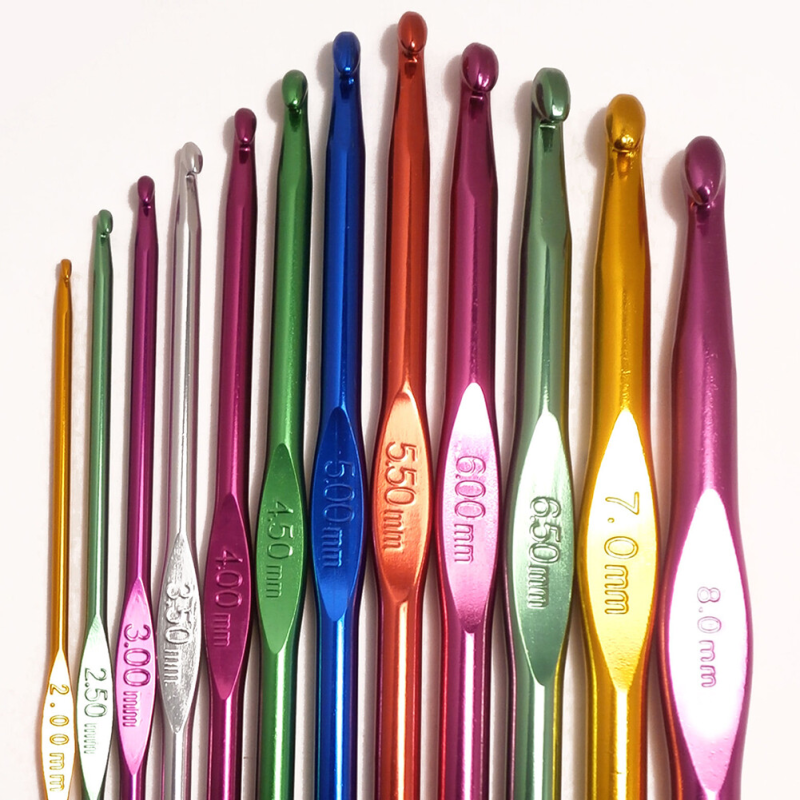
- Start with the Kit Recommendation. Most crochet kits list a recommended hook size and yarn weight. Use that as your first try.
- Swatch, and Swatch Again. Work a 10 cm square and measure. If you have more stitches per 10 cm than the pattern, go up 0.5 mm in hook size. Fewer stitches? Go down.
- Match Project to Feel. Amigurumi benefits from a tighter tension; coasters and decorative plant projects can be looser for softer texture.
- Try Different Hook Materials. Aluminum, bamboo, ergonomic grips—your hands will thank you for finding a hook that feels right.
- Log Your Tests. Keep a little table: yarn, hook size, stitch count, notes. This is gold for future projects.
Little Rules of Thumb
- If your stitches look “puckered,” your hook may be too small.
- If gaps are obvious and shaping collapses, try a smaller hook (yes, smaller—because you need the stitches to sit tighter).
- For beginners, a 3.5–4.5 mm range is a forgiving place to experiment.
- Don’t switch yarns mid-project without testing—they behave differently.
Common Mistakes and Quick Fixes
- Mistake: Trusting the recommended hook like scripture.
Fix: Swatch and verify. - Mistake: Swapping to a larger hook to speed up and losing shape.
Fix: Choose your priority—speed or structure—and pick hook accordingly. - Mistake: Assuming your tension matches the pattern author’s.
Fix: Always measure.
Kit Picks for Tension Practice
- Succulent Plants Crochet Kit — Excellent for testing how different hook sizes affect texture and drape. A forgiving project for trying a few swatches.
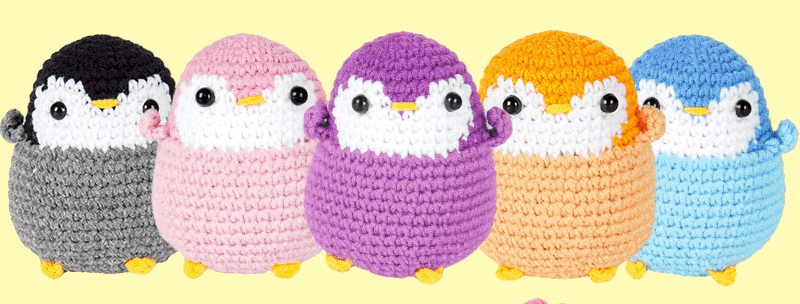
- Penguin Crochet Kit — Perfect for learning the impact of tension on shapework; tiny changes in hook size make big differences in round toys.
Final Thoughts
Finding your perfect hook size is a small ritual—swatch, adjust, make notes, breathe. You’ll have a few “aha” moments (and maybe a couple of small frustrations). That’s fine. The point is progress—and the quiet pleasure of a stitch that looks right. Ready for the next step?
Get your crochet kits and let’s make something cute together. Immediately Grab Your Crochet Kit — Start Your Creative Handmade Journey Now!