Safe and Fun Crochet Kits for Kids: Easy DIY Projects to Learn

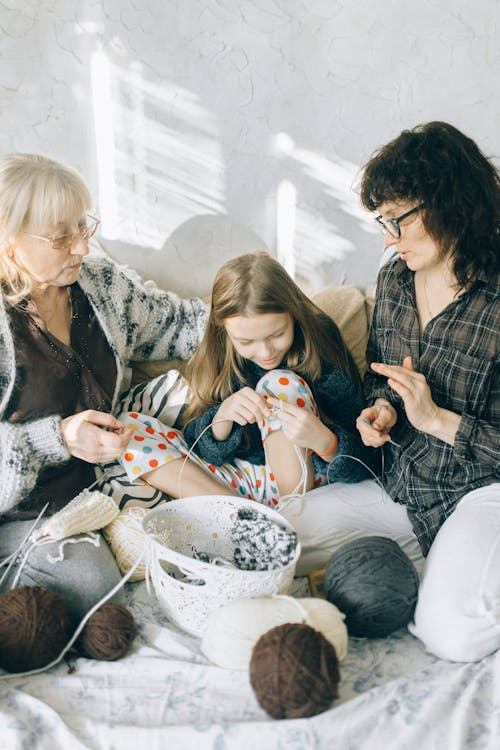
If you’re hunting for a thoughtful gift that actually keeps little ones busy (for longer than a snack break), a crochet kit is a surprisingly solid pick. Crocheting isn’t only for adults — with the right crochet kit, children as young as six can pick up basic stitches, make cute animals or coasters, and feel proud of a real, tangible result. This guide helps parents and gift-givers choose kits that are safe, engaging, and genuinely kid-friendly.
Why a Crochet Kit for Children Makes Sense
A good kit hits three marks: safety, simplicity, and satisfaction. For young makers, that means a hook that’s easy to grip, yarn that won’t shed or irritate, and instructions that don’t assume you already know half a glossary of terms. Unlike screen time, making something with yarn gives instant tactile feedback — and yes, it’s oddly calming. Also, crochet is social: adults and young learners can work side-by-side and trade tips. Win-win.
What to Look for When Buying a Crochet Kit for Kids
- Material safety. Pick non-toxic, washable yarn. Natural cotton is soft and hypoallergenic; good acrylics work too. Avoid kits that include tiny plastic beads or loose buttons unless they’re clearly labeled “parent supervision required.”
- Hook size and feel. Chunkier hooks (think: easier-to-hold) help small hands see stitches and reduce frustration. Ergonomic grips are a nice bonus.
- Clear, illustrated instructions. Photos or big diagrams beat dense paragraphs — every time. Children read pictures before English.
- Complete kits win. Look for sets that include yarn, hook, stuffing (if you’re making animals), stitch markers, and a storage pouch. If a box has everything, it saves a second shopping trip.
- Age and safety labels. Check the suggested age and any choking-hazard notes. If it says “adult supervision recommended,” take that seriously.
Simple Parent–Child Projects & Playful Ideas
- Weekend mini-workshop. Block 30–45 minutes on Saturday. Parent demos two stitches; kids practice on scrap yarn, then you build a small animal or coaster together.
- Storytime sewing circle. Make characters (an animal or a fruit) and use them as puppets in a short story. Suddenly, craft becomes theater.
- Gift factory. Have little creators make a pair of coasters as a thank-you present for a teacher — wrap, add a sticky note, teach the joy of giving.
- Learn while making. A strawberry or apple project can double as a counting or color lesson for younger children — crafty and educational.
Deep Dive: 3 Kids-Friendly Crochet Kits
Vegetable Crochet Kit
This one’s perfect for imaginative play. Vegetable projects (carrot, tomato, cucumber) are chunky, colorful, and simple to finish — which means plenty of small wins. Because the shapes are large, they’re safer for younger children, and parents can weave in quick food lessons while crafting. Difficulty: beginner.
Ready to make your first veggie? Grab the Vegetable Crochet Kit today!
Fruits Crochet Kit
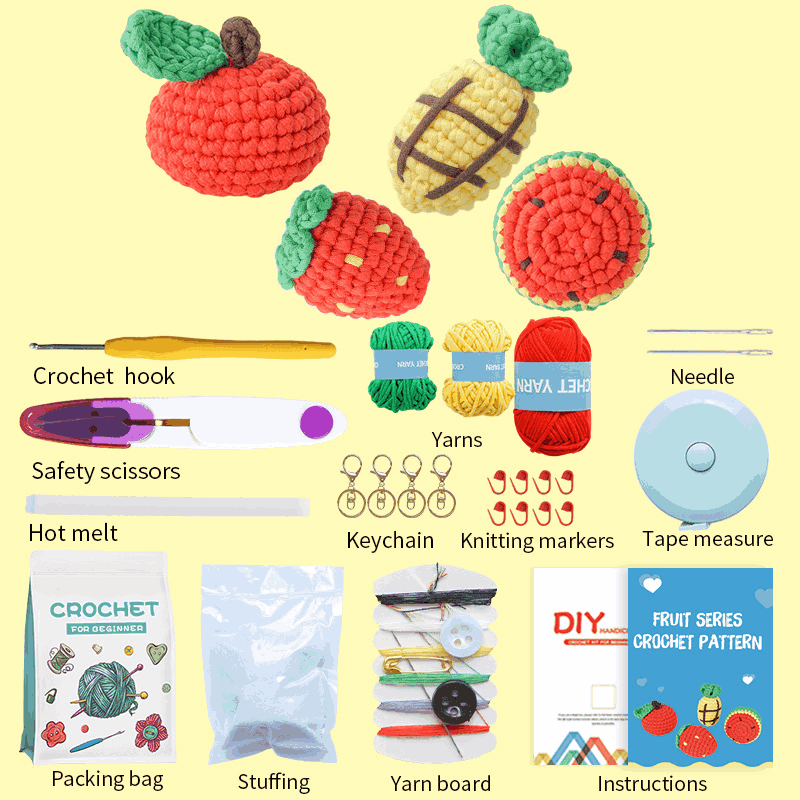
Bright, familiar fruits are instant hits. Strawberries, bananas, and apples in a fruits crochet kit are fast to make and super cute — they often become shelf decor or props for pretend grocery play. Texture variety is useful for tiny fingers. Difficulty: beginner.
Start crafting your sweet fruit collection — get the Fruits Crochet Kit now!
Potted Plant Coasters Crochet Kit
Slightly more grown-up but still very approachable, these projects suit older kids (8+) who enjoy practical crafts. The potted-plant coasters are decorative and useful — children get the satisfaction of seeing their work used daily. Difficulty: easy–intermediate.
Make your home cozier and crafty — order the Potted Plant Coasters Crochet Kit today!
Safety and Teaching Tips Every Parent Should Know
- Supervise tool use. Crochet hooks aren’t sharp like sewing needles, but supervise anyway. Keep small scissors and pins out of reach.
- Short sessions win. Attention spans vary — try 20–45 minute sessions and praise progress often.
- Celebrate mistakes. Yarn tangles and dropped stitches happen. Demonstrate how to “undo” calmly; it teaches problem solving.
- Adapt patterns. Shorten or simplify instructions for younger crafters so they feel the thrill of finish.
- Storage routine. Teach little ones to stash yarn and hooks in a pouch. Cleanup builds responsibility.
Troubleshooting and Picking Age-Appropriate Projects
- When yarn tangles: Stop, breathe, and pull loops back gently. Modeling calm behavior helps children learn patience.
- If a stitch goes wrong: Show how to “frog” (rip) a row slowly, then let them try. It’s a tiny lesson in resilience.
- Project-by-age guide: Ages 6–7 → big, simple forms (coasters, chunky fruit). Ages 8–10 → small animals or potted decor. Tweens → colorwork or a small blanket for a toy.
- When to step back: If frustration rises, switch tasks: stuffing, trimming, or decorating are great helper jobs.
Quick Parent-Child Interaction Method (My Experience)
Last weekend, I spent a cozy afternoon with my 7-year-old daughter on the living room floor, ready to dive into a Vegetable Crochet Kit. She was buzzing with excitement, her little hands twitching to start, and I reminded myself to be patient — this wasn’t just about teaching stitches, it was about enjoying time together.
- Intro (5 minutes)
“Today, we’re going to make a cute carrot!” I said, picking up the crochet hook and demonstrating the first couple of rows. My daughter squinted, watching carefully, while her tiny fingers mimicked my movements almost perfectly. - Practice (10–15 minutes)
She then tried on her own, and I guided gently: “Slowly, wrap the yarn over the hook and keep it steady.” She occasionally pulled the yarn too tight, so I adjusted her grip and praised her: “Amazing! You’re doing so well!” Even small achievements felt huge, and I could see her confidence grow with each stitch. - Making (15–30 minutes)
As the carrot took shape, we took turns stuffing it and sewing parts together. I let her handle some stitches independently, letting her feel the thrill of accomplishment. At one point, she giggled: “Mom, my carrot is so chubby!” I laughed too and replied, “Chubby carrots are the cutest!” The room filled with laughter and small triumphs. - Finish & Share (5–10 minutes)
When we finished, we arranged the carrot for a little photo session and then placed it in a small basket in the kitchen. She proudly said, “Everyone will love the carrot I made!” In that moment, I realized that a crochet kit for kids isn’t just a craft — it’s a memory, a tiny classroom for creativity, patience, and parent–child bonding.
Final Thoughts
A thoughtfully chosen crochet kit can be more than a hobby; it’s a little classroom for patience, creativity, and focus. For parents buying gifts, pick sets that prioritize safety, large visuals, and age-appropriate projects. Whether it’s a tiny vegetable, a cute fruit, or a functional coaster, the right set helps little creators explore a new skill and makes for cozy, screen-free family time.
Get your crochet kit now and start your creative crafting journey — make something together, make a memory together.