Why Your Crochet Looks Off: The Hidden Material Science in Crochet Kits

We’ve all had those moments: you’ve spent a lot of effort completing a crochet kit, the stitches are neat, the shape is perfect, but the final piece just looks… not quite right. Maybe it lacks the drape you wanted, the surface feels rough, or the colors aren’t as vibrant as you expected.
“Before you start doubting your craft, stop and ask yourself one question: Did I choose the right materials?“
In the world of crochet, stitching techniques are the skeleton, but yarn and hooks are the flesh and blood that give the work its soul.
Many enthusiasts, even experienced ones, fall into a trap: focusing too much on the complexity of the pattern while underestimating the foundational impact of material choice.
Understanding “material science” is the key step to elevating your work from “handmade” to “exquisite craft.”
Why Does Your Crochet Kit Work Feel “Off”?
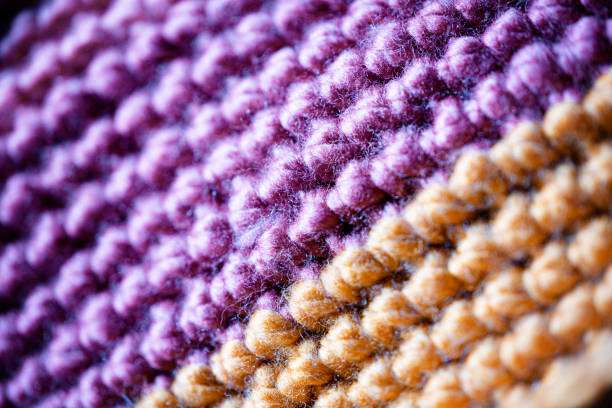
Let’s diagnose the material reasons behind several common problems:
| Problem Description | Likely Material Cause |
|---|---|
| “My doll is floppy and won’t stand up.” | Using yarn that is too soft or lacks support (like very fine cotton or soft acrylic) or low-quality/loose stuffing. |
| “My coaster deformed after a few uses and gets dirty easily.” | Using highly absorbent wool or pilling-prone acrylic. Coasters need durable, water-resistant, or easy-to-clean yarn like tightly spun cotton. |
| “The fabric is either too stiff/hard or too loose/shapeless.” | A mismatch between the hook and the yarn. Hook size directly dictates the tension and “character” of the finished fabric. |
Yarn 101: Reading the “Personality” of Wool
Walking into a craft store can be overwhelming. Let’s simplify yarn into several main types and understand their best uses:
- Cotton:
- Personality: Honest, crisp, and structured.
- Best For: Summer clothes, home goods (coasters, placemats), and dolls that need clear shaping. It offers great stitch definition.
- Acrylic:
- Personality: Easy-going, vibrant, and affordable.
- Best For: Blankets, scarves, and children’s items. It’s a beginner-friendly all-rounder with endless color choices.
- Wool:
- Personality: Warm, elastic, and classic.
- Best For: Winter wear (hats, gloves, sweaters) and projects requiring loft and bounce.
- Blends:
- Personality: The “team player” that combines strengths.
- Best For: Versatile use, balancing features like the softness of acrylic with the texture of cotton.
Beyond material, pay attention to “Weight” (thickness). Thick yarn works up quickly for heavy, 3D pieces, while thin yarn is for delicate, time-consuming finery.
The Crochet Hook: Not Just a Needle, But Your Sculpting Knife
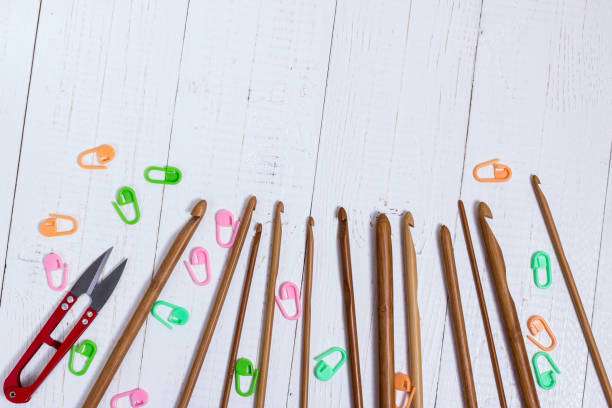
The hook material (aluminum, plastic, or wood) mostly affects hand-feel. The size (mm) is what truly matters. Your hook must match the yarn. Follow these general rules:
- Check the recommended size on the yarn label.
- For a firm, upright effect (like dolls), use a hook 0.5-1.0 mm smaller than recommended.
- For a soft, flowing effect (like scarves), try a hook 0.5-1.0 mm larger.
Case Study: Using the Right Materials for “Lifelike” Fruit
Imagine you want to crochet a basket of realistic fruit. To achieve this, you need vibrant colors, a texture that can mimic strawberry seeds or apple surfaces, and a hook that ensures the shape is held perfectly.
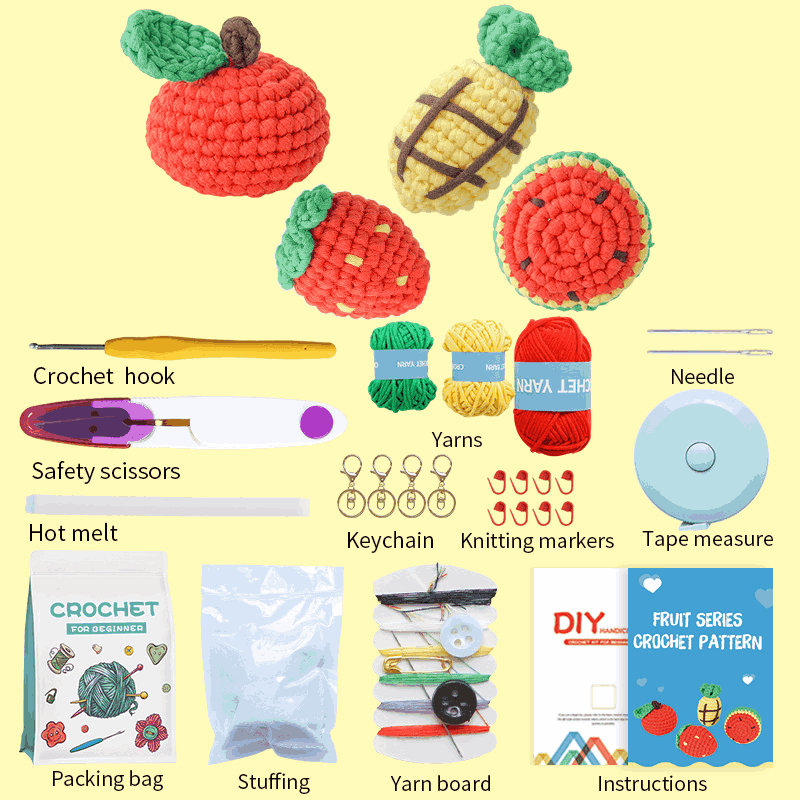
This is where a Fruit Crochet Kit shines. A well-designed kit handles the most difficult part of material science: precision matching.
- Yarn Selection: The kit includes yarn (usually high-quality cotton or blends) specifically screened to ensure vibrant saturation—bright reds for strawberries and fresh greens for apples.
- Tool Matching: The included hook has been pre-tested with the yarn to ensure smooth handling and the perfect fabric density.
- Guaranteed Results: Since everything is pre-calculated, you can focus on the joy of shaping without worrying that the final piece will look “wrong.”
[Experience the perfection of pre-matched materials with our Fruit Crochet Kits.]
Advanced Thinking: How to Select Materials for Your Own Designs?
When you graduate from kits and start your own designs, use this logic:
- Define the Purpose: Is it for decoration, wearing, or play? Does it need frequent washing?
- Identify the Fiber: Baby doll? Choose soft, washable cotton. Winter blanket? Wool or thick acrylic is best.
- Match the Hook: Always crochet a “swatch” first to check if the fabric density meets your satisfaction.
Frequently Asked Questions (FAQ)
Q: As a beginner, what yarn and hook should I invest in first?
A: For a total novice, my strongest advice is to start with a reputable entry-level crochet kit. It removes all decision costs and allows you to experience a “perfectly matched” project to build confidence.
Q: If I only have one hook size, can I make do with a different yarn?
A: You can try, but the results will be compromised. If the hook is too small, the work will be stiff and tire your hands; if it’s too large, it will be loose and leak stuffing. It’s always better to use the recommended range.
The charm of crochet lies in the fact that it is both a sensory artistic expression and a rational craft practice. When you start studying your yarn and hooks like a scientist, you gain a valuable sense of control.
Don’t let the frustration of choosing the wrong materials extinguish your creative flame. Let high-quality, matched materials become the best spokesperson for your exquisite craftsmanship. Start by understanding every thread and needle in your hand, and let your next work stand out in both skill and texture.